Short answer: VESDA (very early smoke detection apparatus) is a brand of aspirating smoke detection. Instead of waiting for smoke to drift up to a detector on the ceiling, a fan in the detector pulls air through a network of small pipes with drilled sampling holes and checks it in a laser detection chamber. It can see very small amounts of smoke and gives several warning levels before a full fire alarm, which is why data centers, telecom rooms, high-ceiling warehouses, clean rooms and businesses with high-value inventory use it. It connects to your building's fire alarm panel like any other initiating device.
A standard smoke detector works well in an office or hallway. It struggles where air moves fast, ceilings are very high or a few minutes of early warning are worth a lot of money. That's the job aspirating detection was built for.
How does aspirating smoke detection work?
An aspirating smoke detector (ASD) has four parts:
- Sampling pipe. A pipe network (often 3/4 inch CPVC) runs across the ceiling, along racks, in return air grilles or wherever smoke is likely to travel. Small holes are drilled at set intervals.
- Aspirator fan. A fan inside the detector continuously draws air from every hole back to the unit.
- Filter and detection chamber. The air passes through a filter that removes most dust, then through a laser chamber that measures smoke particles.
- Alarm levels. The detector compares readings to programmable thresholds. VESDA units use four levels per pipe or sector: Alert, Action, Fire 1 and Fire 2.
Those staged levels are the key difference for a business. An Alert can notify on-site staff to look for an overheating power supply or a smoldering motor while it is still a maintenance problem. A Fire level sends the signal to the fire alarm panel for a full alarm.
How is VESDA different from a regular smoke detector?
| Spot smoke detector | Aspirating (VESDA style) detection | |
|---|---|---|
| How smoke reaches it | Smoke has to drift to the detector | A fan pulls air to the detector |
| Warning levels | Usually one alarm | Several programmable levels before a fire alarm |
| High ceilings | Smoke can dilute before it reaches the ceiling | Sampling holes can be placed lower, in racks or at several heights |
| High airflow rooms | Cooling air can push smoke away from the detector | Pipes can sample at return air grilles where the air goes |
| Where the device sits | On the ceiling, above the hazard | Detector can be mounted at an accessible height; only pipe and holes are overhead |
| Testing access | Each detector needs a lift or ladder in tall spaces | Most testing and service happens at the detector unit |
| Dust and dirty air | Can cause nuisance alarms | Filtering and laser detection help tell dust from smoke |
NFPA 72, the National Fire Alarm and Signaling Code, recognizes air sampling as an accepted smoke detection method and covers its spacing, installation and testing. Ceiling sampling holes generally follow the same spacing rules that apply to spot detectors.
Which businesses use VESDA?
Data centers and server rooms
Server rooms move a lot of air to keep equipment cool. That airflow dilutes smoke and pushes it away from ceiling detectors. Aspirating systems can sample at the ceiling and at the return air grilles of cooling units, where room air is pulled through. The fire protection standard for telecommunications facilities, NFPA 76, defines very early warning fire detection and names air sampling as one of the ways to meet it. Whether NFPA 76 applies to your building depends on the facility and what your local authority has adopted, so confirm with your fire protection designer or fire marshal.
Telecom and network equipment rooms
The same logic applies to smaller IT closets and telecom rooms that hold equipment the business can't operate without. An early Alert lets someone shut down a failing device before it becomes a fire and a full building evacuation.
Warehouses with high ceilings
In tall warehouses, and especially in high-bay racking, smoke is heavily diluted by the time it rises to a 40 foot ceiling. Aspirating systems can sample inside racks and at several heights, and a single detector can cover long pipe runs. Maintenance is a big part of the case here: spot detectors on a high ceiling need a lift for every test, while most aspirating service happens at the detector unit. Facilities that run around the clock also avoid shutting down aisles for lift work. See more about protecting warehouses and distribution centers.
Clean rooms and controlled environments
Clean rooms and labs with tightly controlled airflow are a common fit, because sampling works with the airflow instead of against it.
Firearm dealers and high-value inventory
Businesses holding inventory that is expensive, hard to replace or dangerous to lose in a fire, including firearm dealers, are good candidates for very early warning. The earlier smoke is caught, the more time staff and responders have before smoke, heat and water damage stock. We are not aware of any law that requires these businesses to use aspirating detection. It is a choice owners make to protect what they hold.
What drives the cost of a VESDA system?
Prices vary widely by building, so we won't quote numbers here. The biggest cost factors are:
- Area and number of zones. How many separate areas need their own detector or sector.
- Pipe network design. Total pipe length, number of branches and sampling holes, and how hard the pipe is to run (finished ceilings, racks, cold rooms).
- Ceiling height and access. Installing pipe in a 40 foot warehouse needs lifts and more labor than a 9 foot server room ceiling, even though it saves lift work later.
- Design and calculations. Aspirating systems are designed with the manufacturer's software to confirm each hole draws enough air and that smoke reaches the detector fast enough.
- Panel tie-in. Whether your existing fire alarm panel has capacity, or needs modules or an upgrade.
- Other connections. Some designs use a higher alarm level as one input to a clean agent or pre-action suppression system, or send alerts to a building management system. Each connection adds design and testing work.
- Commissioning and documentation. Startup testing, transport time testing and the paperwork your fire marshal or insurer will want.
The way to get a real number is a site walk and a design. Turner Security provides free assessments and quotes.
How is VESDA maintained and tested?
Aspirating systems are inspected and tested under NFPA 72 like the rest of your fire alarm system. In general terms, that means:
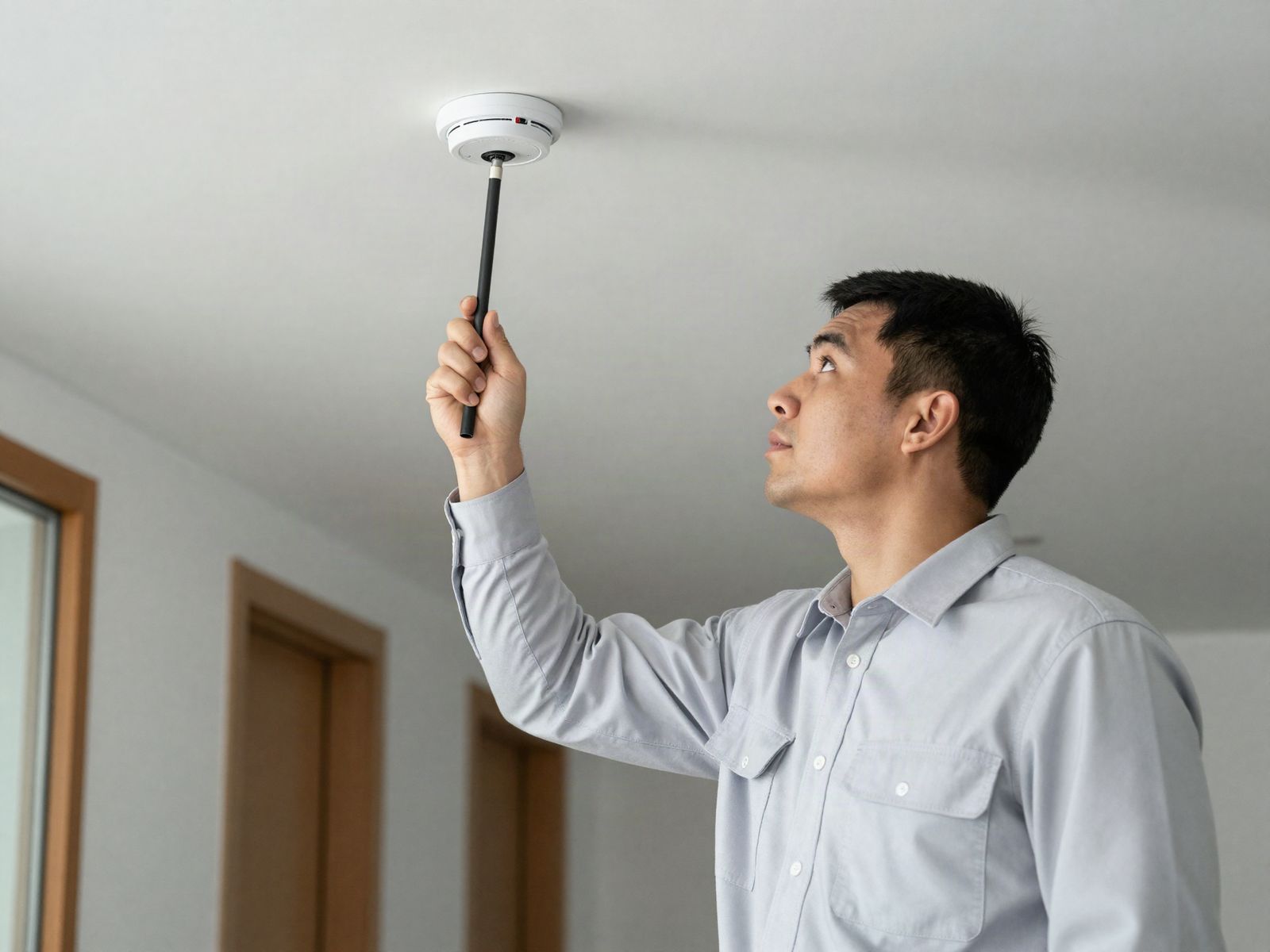
- Semiannual visual inspection of the detector, filters, pipe, fittings, supports, labels and sampling holes to make sure nothing is blocked, broken or disconnected.
- Functional testing (generally annual) that includes an alarm response test and a transport time test, as called for by the system design, the manufacturer and the code edition your jurisdiction enforces: smoke is introduced at the sampling hole farthest from the detector, and the technician confirms how long it takes to register.
- Routine maintenance such as cleaning sampling holes, flushing the pipe network and replacing filters when the detector reports a filter fault, when the filter looks bad at inspection or on the schedule the manufacturer sets.
Always follow the manufacturer's instructions and the edition of NFPA 72 your jurisdiction enforces. For the bigger picture on fire alarm testing in this state, see our guide to fire alarm inspection requirements in Tennessee.
How does VESDA tie into the fire alarm panel?
An aspirating detector is an initiating device, just like a smoke detector or pull station. Its outputs (relays or addressable modules) are wired to the fire alarm control panel, which handles the building alarm, notification devices and signal to your monitoring center. Typically:
- Early levels (Alert, Action) are set up as supervisory or pre-alarm signals so staff can investigate without evacuating.
- Fire levels are set up to put the panel into alarm.
- Trouble conditions such as airflow faults (a cracked or blocked pipe) or a dirty filter report to the panel as trouble signals, so problems with the detector itself don't go unnoticed.
How each level is programmed is a design decision made with the owner, the designer and the authority having jurisdiction.
FAQ
Does VESDA replace sprinklers?
No. Aspirating detection is a detection system. It warns you early, but it does not put out a fire. Sprinklers and other suppression systems are separate, and your building code requirements for them don't change because you added early detection.
Is VESDA required by law for data centers?
Not as a blanket rule that we know of. NFPA 76 treats very early warning detection as one of several detection levels for telecommunications facilities, chosen through a risk analysis, and some owners, insurers or local authorities require it for certain spaces. Check with your fire marshal and insurer for your specific building.
Can VESDA be added to my existing fire alarm system?
Usually, yes. Aspirating detectors connect to the fire alarm panel through relays or modules. The panel needs available capacity, and the new devices must be programmed and tested as part of the system.
Will dust in my warehouse set it off?
Aspirating detectors filter incoming air and use laser detection to help tell dust from smoke, and thresholds are set for the environment during commissioning.
Talk to us about early warning detection
Turner Security installs VESDA aspirating smoke detection alongside conventional commercial fire alarm and fire protection systems for businesses in Nashville, Middle Tennessee, Chattanooga and beyond. If you run a server room, a tall warehouse or a site full of high-value inventory, request a free assessment and we'll tell you where early warning makes sense and where a standard detector will do the job.