Live talk-down
Agents speak directly to people on your property through outdoor speakers, describing them and telling them they are being watched. Many leave right away.

● Commercial security
Trained monitoring agents watch your cameras live, speak to trespassers through on-site speakers and call police or your team when it matters. Stop problems while they are happening, not the next morning, often for less than on-site guards.
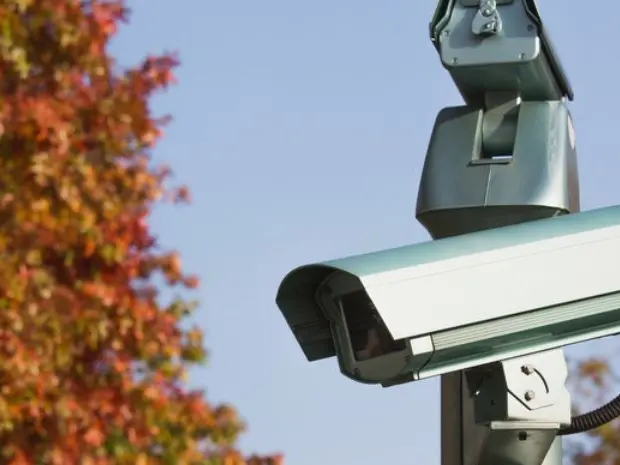
Remote guarding, also called live video monitoring or virtual guarding, means trained agents watch your security cameras in real time during the hours you choose. When someone shows up who should not be there, the agent speaks to them live through a speaker on site, and if they do not leave, the agent contacts police and your team.
Turner Security sets up remote guarding and live video monitoring for businesses in Middle Tennessee, the Chattanooga area and across the country. Many customers use it to replace or reduce on-site security guards.
Here is how a typical after-hours event plays out on a site with remote guarding and live video monitoring.
Turner Security has protected businesses since 1976 from offices in Smyrna, serving Nashville and Middle Tennessee, and in Chattanooga. We set up live video monitoring for local businesses and for multi-site customers, including a national chemical distributor with 137 locations across the US and Canada that replaced security guards with live video monitoring.
There are no long-term agreements on our security or monitoring services. Our help desk resolves about 60% of service issues remotely, often before a truck is needed, and when someone does need to come out, we can often schedule service the same day you call.
Recorded video tells you what happened. Remote guarding is built to stop it from happening.
Agents speak directly to people on your property through outdoor speakers, describing them and telling them they are being watched. Many leave right away.
Your cameras are watched live during the hours and days you choose, such as nights, weekends and holidays.
You decide who gets called and when. Agents follow your instructions and contact police when a threat is real.
Video analytics flag people and vehicles in the areas you care about, so agents focus on real activity instead of wind and shadows.
You get a record of what happened, what the agent did and the video clip, ready for your team, insurance or police.
One program across many locations, with the same procedures and reporting at every site.
On-site guards are expensive, can only watch one spot at a time, and cost the same whether anything happens or not. Remote guarding can cover many camera views at once, and agents respond when something triggers an alert.
One national chemical distributor with 137 locations across the US and Canada replaced its security guards with live video monitoring. Not every site will see the same result, but the comparison is worth running for any business paying for guard shifts.

Most sites can use the cameras they already have.
We look at your cameras, network, lighting and problem areas, and where speakers need to go.
We agree on monitored hours, protected zones, call lists and what agents should do in each situation.
We add speakers, cameras or analytics where needed and connect your site to the monitoring center.
We test talk-down and escalation, then tune alerts so agents see real activity.
Live video monitoring is priced and built around how your site runs. These are the choices we walk through with you before anything is connected.
Most businesses choose closed hours only, such as nights, weekends and holidays. Sites with open yards or remote equipment sometimes add coverage during the day. More hours usually means a higher monthly cost.
We mark the areas where any person after hours is a problem, like a fence line, equipment yard, loading dock or parking lot, and leave out areas where activity is normal, like a public sidewalk.
Agents can only act on what they can see. We check each camera for a clear view of the zone, enough light at night and an angle that shows a person well enough to describe.
Talk-down works when the person on site can clearly hear the agent. We place speakers where trespassers actually stand, not just where it is easy to mount them.
You decide who gets called, in what order, and when police should be contacted. A short, current call list makes every event faster to resolve.
An on-site guard can only be in one place at a time and has to walk a route. Remote guarding uses the cameras you already have to watch many areas of a property at once during the hours you choose. Many businesses use it to replace guards or to cover the hours a guard is not there.
Remote guarding watches multiple camera views across the property. A guard covers one area at a time on foot or in a vehicle.
The agent speaks through on-site speakers as soon as someone is seen, then escalates to police and your team if they stay. A guard responds once they reach the spot.
Every event is tied to recorded video you can pull later for police or insurance. A guard's report depends on what they saw and wrote down.
Remote guarding is a monthly service with no guard wages or overtime. Read our full comparison of remote guarding and security guards for the trade-offs.
Open lots full of vehicles, trailers and equipment that sit unattended overnight.
Job sites with materials, copper and tools on hand, often with no power or fence at first. Mobile camera systems can bring monitoring to the site.
Large perimeters, tank farms and yards where trespassing is a safety risk as well as a theft risk.
Docks, trailers and fenced yards that need eyes on them after the last shift leaves.
Parking areas, amenity spaces and back-of-house areas where problems tend to happen late at night.
Companies with locations in several states that want one monitoring standard across every site.
Cost depends on the number of cameras, monitored hours and how many sites you have. For many businesses it costs less than staffing a guard for the same hours, and it can cover many camera views at once. We will compare it to your current guard costs during the assessment.
Live talk-down means a monitoring agent speaks to a person on your property through an outdoor speaker in real time. Hearing a live voice describe them often makes trespassers leave before they do any damage.
The agent reviews the video, speaks through the on-site speaker and follows your escalation steps. If the person does not leave or the threat is real, the agent contacts police and your contact list, and you get a report with the video.
Usually, yes. Most modern camera systems can be connected to live monitoring, sometimes with a small upgrade or AI video analytics added. We confirm compatibility during the site review.
For many sites, yes. A remote agent can cover many camera views at once, never leaves a post, and can contact police as soon as a threat is confirmed. Some sites still need a person on site for tasks like checking in visitors, and we will tell you honestly if yours is one of them.
Yes. We support businesses with many sites, including a national customer with 137 locations across the US and Canada, with the same procedures and reporting everywhere.
Yes. Turner Security sets up live video monitoring for businesses across Nashville and Middle Tennessee from our Smyrna office, and across the Chattanooga area from our Chattanooga office. We also monitor sites for multi-location customers in other states.
With video alarm monitoring, an alarm or sensor trips first and the monitoring center then looks at video to confirm it. With live video monitoring, agents watch your cameras during the hours you choose and can speak to someone before a door is forced or an alarm goes off. Our guide on live video monitoring vs. alarm monitoring explains when each fits.
Yes. Talk-down only works when the person on site can clearly hear the agent, so we check your existing cameras and add outdoor speakers where trespassers actually stand, not just where they are easy to mount.
Cost depends on the number of cameras and zones, the hours covered and whether speakers or new cameras are needed. We walk the site for free and give you a written monthly price, with no long-term agreement.
106 Enon Springs Rd E, Smyrna, TN 37167
Get directions to the Smyrna (Nashville & Middle TN) office (opens in a new tab)5959 Shallowford Rd, Suite 541, Chattanooga, TN 37421
Get directions to the Chattanooga office (opens in a new tab)Smart alerts and license plate recognition on the cameras you already own.
Solar camera trailers with live monitoring for job sites and lots.
One security program across all your locations.
Both send a problem to a monitoring center. The difference is what the operator can see and do when the…
Remote guarding puts trained agents on your cameras instead of in a guard shack. Here is how the two compare.

Networks, IP phones, servers and managed IT are handled by our sister company, TechCore. Same owners, same local team, one call for security and IT.
Prompt, friendly and there whenever you need them. Provide great protection.
Stayed on phone with me until I was sure everything was fine!
We switched to Turner Security five years ago after enduring a decade of horrendous service elsewhere, and the difference has been remarkable. They've been consistently responsive to the occasional service request, and their monitoring has been first-rate. The level of reliability and professionalism they provide is exactly what we were hoping for.
Book a free assessment and we'll compare remote guarding to your current coverage.
Send a quick message and the right Turner team will get back to you. Prefer to talk? Call the office closest to you.