The useful answer is not a number pulled from another company's recorder settings. Security footage retention should reflect why your business records, how quickly incidents come to light, what obligations apply, and what the system can reliably retain.
Start with the operational need, then have the appropriate technical and legal professionals help translate it into a documented policy and configuration. Buying a larger drive before answering those questions can produce more footage without producing a better retention plan.
When would you know you needed the recording?
Consider how concerns actually reach your team. An employee might report a parking-area incident immediately. A discrepancy at a receiving door may emerge during a later review. A manager who works at several locations may not hear about an issue on the day it happens.
Map those reporting delays using your own experience, not an invented industry average. Ask operations, management, and the people handling incident reports when they typically need to look back and what information helps them narrow the search.
Use that discussion to define a target for normal recording availability. A target is an input to the system design, not evidence that the current system already meets it. It also does not replace a separate process for preserving relevant material when a specific issue is identified.
What requirements apply to your business?
Do not assume a commonly advertised recording period is a legal rule for every Tennessee business. Requirements can depend on the business activity, applicable law, contract, insurer instructions, or a particular matter requiring preservation. Obtain advice appropriate to your operation rather than relying on a general blog for a legal determination.
The FTC's business information protection guidance recommends retaining needed information under a written policy that addresses business and legal reasons, security, duration, and disposal. It is useful policy guidance, not a universal camera-footage timetable.
Privacy belongs in the same discussion. More stored video can mean more information to protect and more access to govern. Decide who may review or export recordings, for what purposes, and how the business handles requests from employees, customers, investigators, or other parties.
Audio, sensitive locations, or specialized industries can introduce additional issues. Do not assume that a video retention decision also answers whether a particular form of recording is permitted.
Does the configured retention match the available history?
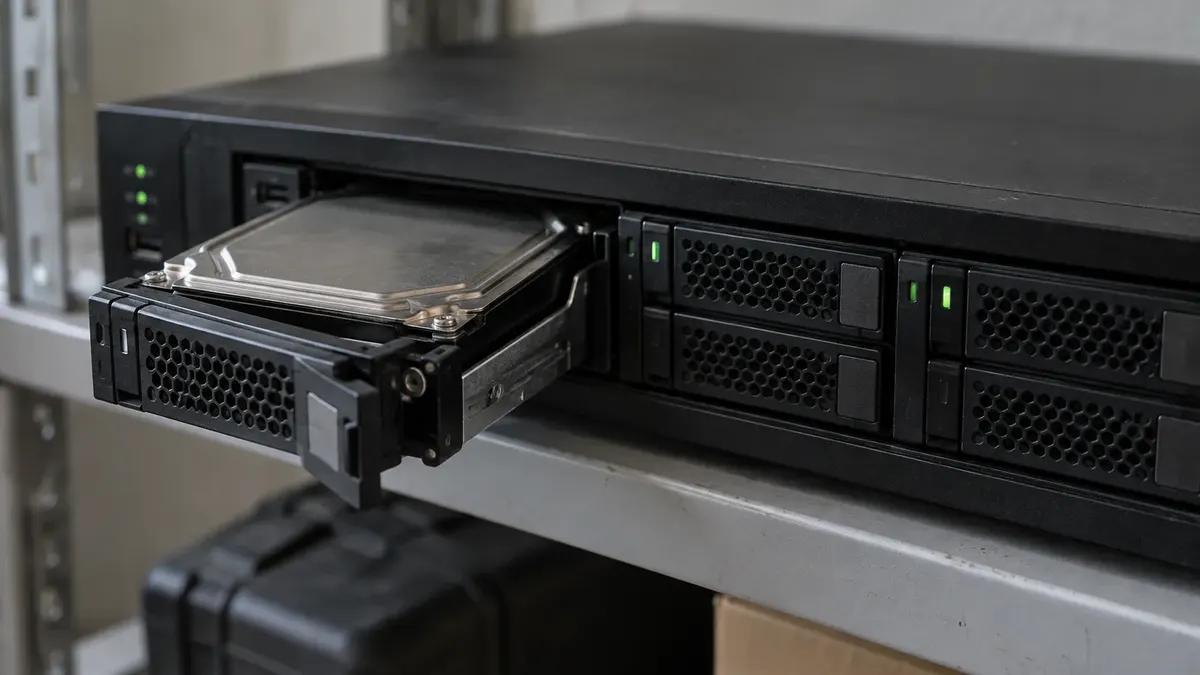
A recorder setting may describe a desired limit while the available storage determines how much history is actually present. Ask the provider to demonstrate the oldest accessible recordings for representative cameras and confirm whether any gaps exist within the relevant period.
Distinguish ordinary recording behavior from a fault. A schedule, event-based setting, or intentionally excluded period may explain an absence, but staff should understand that behavior. Unexpected gaps need diagnosis.
Check more than one quiet day. Scene activity, image settings, added cameras, and other changes can affect the storage required. A new installation may need a follow-up review after enough representative operation has occurred to evaluate the retention target.
Axis's technical discussion of bitrate control explains how video data rates and rate-control choices relate to scene conditions and storage planning. The practical takeaway is to size and verify your specific system, not promise a duration from drive capacity alone.
Which settings affect the calculation?
Ask the technical team to document the assumptions behind its estimate. These may include the number of cameras, recording resolution, frame rate, compression, recording method, and usable storage after the system's own requirements.
Do not lower image quality blindly just to make a retention number look better. A longer archive that no longer supports the intended viewing task may not serve the business. Review a sample recording after any relevant change and confirm the result still meets the agreed purpose.
Cloud arrangements need similar clarity. Verify the plan's included retention, applicable limits, recording behavior during connectivity problems, and the process for exporting material. Do not infer these details from a general cloud label or from another customer's subscription.
For hybrid systems, identify which copy is authoritative for each purpose and how staff retrieve it. Avoid assuming local and remote copies cover exactly the same periods or survive the same failure conditions.
What happens when an incident requires preservation?
Routine retention and incident preservation are separate processes. Once potentially relevant footage is identified, have the authorized team follow the applicable preservation procedure promptly. Seek appropriate legal guidance when a claim, investigation, or other duty to preserve may be involved.
Do not assume a bookmarked clip is protected against normal deletion on every platform. Verify what the installed system actually does and whether an export or other approved preservation action is necessary. Keep the surrounding context required by the responsible reviewer, not only a short segment chosen without a clear rationale.
Document the camera, time reference, exported material, responsible person, and storage location as appropriate. Limit access and protect the preserved copy. An export workflow does not, by itself, establish authenticity or guarantee admissibility in a legal proceeding.
Our article on security footage and liability claims explores the related incident-documentation issue. Keep that response process connected to retention planning without treating every routine recording as an indefinitely preserved incident file.
What would a useful policy decision look like?
Consider an illustrative business with an office and a receiving area. Office concerns are usually reported to a manager promptly, while receiving discrepancies are reviewed through a different workflow. The business should investigate those differences before choosing a common retention target or separate targets where the system supports them.
The decision record could explain the purpose of each recording group, the reporting process it supports, who approved the target, and which obligations were considered. The technical record would then identify the configuration and testing used to support that target. Neither document needs to contain sensitive administrator credentials.
This example deliberately does not assign a number of days. A made-up duration would look decisive while skipping the very facts the policy is meant to consider. The valuable deliverable is a reasoned target paired with a way to verify it and an exception process for relevant incidents.
Who checks that the policy still works?
Assign an owner for both the written policy and the technical verification. They may be different people. Management decides the operational objective with the relevant advisers; the responsible provider confirms how the system supports it and reports limitations.
Revisit the plan when cameras are added, business hours change, storage is replaced, cloud plans change, or reporting needs evolve. Include a way for staff to report missing history before an important request exposes it.
Keep a short verification record: the checked cameras, accessible date range, observed gaps, settings reviewed, and corrective actions. Label it as a sample check when that is what was performed. It should not imply that every minute of every recording has been examined.
Set the target before buying more storage
Bring three things to a storage discussion: your intended look-back period, the circumstances that drive it, and the current system's demonstrated history. That gives the technical team a meaningful problem to assess.
Turner Security Powered by TechCore can discuss storage and retrieval needs within a business security camera system review. Call Nashville at (615) 223-9600 or Chattanooga at (423) 344-3787. The aim is a documented, verifiable retention plan that supports your business, with legal requirements confirmed by the appropriate adviser.