Short answer: Weather rarely kills an outdoor camera in one shot. It wears it down: lenses that fog every morning, water creeping into connections, power surges from nearby lightning and wind knocking cameras off aim. Choose equipment rated for outdoor use, seal and protect every connection, add surge protection, mount it solidly and check the system after every major storm.
What our weather does to outdoor equipment
Middle Tennessee and the Chattanooga area put outdoor security gear through a lot: hot, humid summers, frequent thunderstorms with lightning, spring severe weather and the occasional ice storm. Each one causes a different kind of failure.
Heat and sun
- Cameras facing west into the afternoon sun can wash out at exactly the hour you need them.
- Dark enclosures in full sun run hot, which shortens the life of electronics.
- Sun and heat break down cable jackets and plastic housings over time.
Plan placement with the sun in mind, use sunshields where needed and keep exposed cable runs in conduit.
Rain and humidity
Water is the most common cause of slow failure. Check the camera's IP rating, the ingress protection code defined in the international standard IEC 60529. The first digit covers dust and the second covers water. IP66 means dust-tight and protected against powerful water jets. IP67 means dust-tight and protected against temporary immersion, but under IEC 60529 a 7 rating does not automatically include the water-jet test, which is why many outdoor cameras list both. For outdoor business cameras, IP66 (alone or alongside IP67) is a sensible baseline.
The rating only covers the camera. Most water damage happens at the connections:
- Use weatherproof junction boxes at each camera.
- Leave a drip loop so water runs off the cable before reaching the connector.
- Seal holes where cable enters the building or the box.
- Watch for condensation inside the dome, which often points to a bad seal.
Lightning and power surges
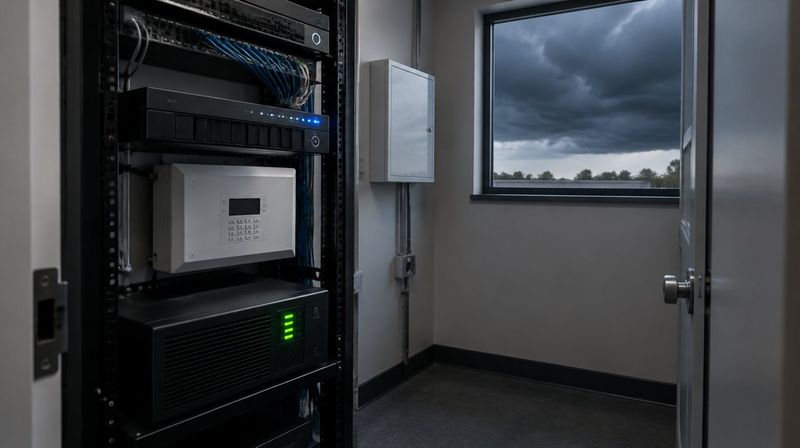
A strike does not have to hit your building to damage equipment. Surges can travel along cable runs, especially long runs out to poles, gates and outbuildings. Surge protection on those runs, proper grounding and a battery backup for the recorder and network switch protect the expensive parts of the system and keep it recording through short outages.
Wind and ice
- Cameras on light poles and building corners get pushed a few degrees at a time until they no longer see the door they were meant to cover.
- Undersized mounts and poles sway, which blurs video at night.
- Ice can coat domes and build up on housings, blocking the view until it melts.
Use mounts and poles rated for the camera, tighten hardware during routine service and check aim after high winds.
An after-storm checklist
- Open the camera app and confirm every camera shows live video.
- Compare each view to how it looked before. Has anything shifted?
- Check that the system is still recording, not just showing live video.
- Look for fogged or water-spotted lenses.
- Check the recorder, switch and battery backup for warning lights.
- Walk outside and look at mounts, cables and junction boxes for damage.
How Turner Security helps
Turner installs and services business security camera systems for Middle Tennessee and the Chattanooga area. When a camera drops offline after a storm, our help desk resolves most service issues remotely before a truck rolls, and when a technician is needed we can often schedule service the same day you call through our service request page. If storm damage leaves part of a property without working cameras, a mobile camera trailer can cover the gap while repairs are made.
Mistakes to avoid
- Buying indoor cameras for covered outdoor spots. A porch or overhang still gets humidity, blowing rain and temperature swings.
- Skipping surge protection on long runs. The cheapest part of the job protects the most expensive parts.
- Assuming the system is fine because live view works. Confirm it is recording.
Frequently asked questions
What IP rating should an outdoor business camera have?
IP66, often listed alongside IP67, is a sensible baseline for exposed locations. The rating covers the camera itself, so the connections still need to be sealed.
Can lightning damage cameras without a direct hit?
Yes. Surges can travel along cabling from a nearby strike. Surge protection and grounding reduce that risk.
How often should outdoor cameras be checked?
Glance at every view regularly, check recording after each major storm and have mounts and connections inspected during routine service.
Keep your cameras working in any weather
Learn more about our business security camera systems and request a quote or service. Call our Smyrna office at (615) 223-9600 for Nashville and Middle Tennessee, or our Chattanooga office at (423) 344-3787.