
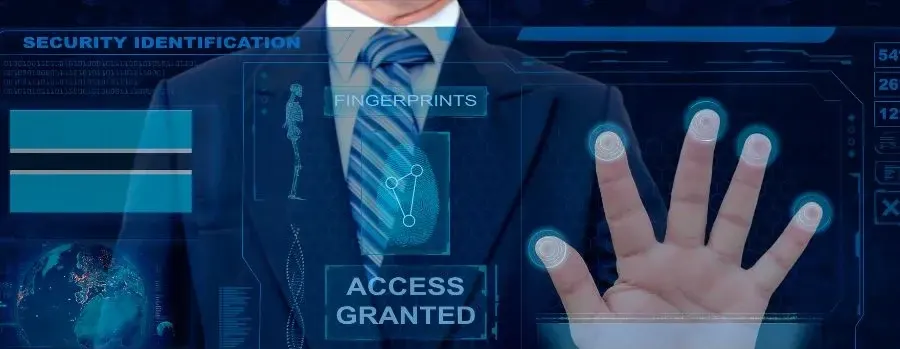
Short answer: Biometric readers that use a fingerprint or face are getting faster and more common, but for most businesses they make sense on a few high-value doors, not every door in the building. Expect more face readers, more phone credentials that rely on the phone's own fingerprint or face unlock, and more attention on privacy rules for collecting biometric data.
What is actually available
- Fingerprint readers: the most familiar option, common on server rooms and inventory cages.
- Face readers: hands-free, which helps at busy doors and for staff carrying things or wearing gloves.
- Palm and iris readers: used in some higher-security settings, less common in typical businesses.
- Phone credentials: not biometric readers themselves, but many phones require a fingerprint or face to unlock, which adds a biometric step without the business storing anyone's biometric data.
Where biometrics make sense
The question is not "is biometric better," it is "does this door need proof that it is really this person, not just their card?" Good candidates:
- Medication and supply rooms in medical offices.
- Server and network rooms.
- Cash rooms, safes and high-value inventory cages.
- Any door where staff have been caught lending or sharing cards.
If a door only needs to keep the general public out, a card, fob or phone credential with an entry log is usually enough. Biometrics earn their cost where a shared card would defeat the purpose of the lock.
Where cards, fobs and phones still win
- High-traffic main entrances where speed matters and a reader slowdown creates a line.
- Vendors and temporary workers, who you will not want to enroll biometrically.
- Dirty, wet or gloved work, where fingerprint reads can be unreliable.
- Tenants and visitors in multi-tenant buildings.
Most businesses end up with a mix: cards, fobs or phones on most doors and a biometric reader on the one or two that matter most. Our guide on access control vs keys explains why moving off keys is usually the first step.
Check the privacy rules before you collect anything
Biometric data is treated differently from a card number. If your business has employees in other states, check those states' laws. Illinois is the best known example: under its Biometric Information Privacy Act, section 15, a private business must give written notice, state the purpose and how long the data will be kept, get a written release before collecting it, keep a public written retention policy and destroy the data when its purpose is fulfilled or within 3 years of the person's last interaction, whichever comes first. Rules vary by state, so have your attorney review your plan before enrolling anyone. This is general information, not legal advice.
How to plan a biometric rollout
- List the doors where proving identity matters more than speed.
- Decide who enrolls. Usually a small group, not the whole company.
- Write your notice, consent and retention policy before the first enrollment.
- Keep a backup method for people who cannot enroll or whose reads fail.
- Tie the door to cameras so entries to sensitive rooms are easy to review.
- Review access quarterly and remove people who no longer need it.
How Turner Security helps
Turner designs commercial access control around your doors, your people and your schedule, using key cards, fobs, PIN codes and phone credentials, tied to cameras and alarms. If you are weighing biometrics for a door or two, we can talk through whether a card, fob or phone credential with an entry log already solves the problem, then install and support the access control system from our offices in Smyrna and Chattanooga.
Frequently asked questions
Is biometric access control more secure than cards?
It is harder to share, which closes the most common gap with cards. It is not automatically better for every door, because speed, cost and privacy obligations all go up.
Do face readers store photos of employees?
It depends on the product. Many systems store a mathematical template rather than a photo, but you should confirm with the manufacturer and include it in your retention policy.
What happens if a fingerprint will not read?
Plan a backup, such as a PIN or card, for that door. Cuts, dry skin and gloves all affect fingerprint reads.
Plan the right access control for your doors
Start with our commercial access control page and request a quote. Call our Smyrna office at (615) 223-9600 for Nashville and Middle Tennessee, or our Chattanooga office at (423) 344-3787.