Short answer: Published US industry pricing guides commonly put a standard card or mobile-credential door, fully installed, at roughly $1,500 to $3,500, and some put the all-in figure (hardware, labor and the first year of software) at about $3,000 to $5,000 per door. A door that already has power, cabling and a working lock can come in well under that range. A door that needs new locking hardware, a long cable run or a biometric reader comes in above it. Cloud systems also carry a monthly software fee, which published ranges put anywhere from a few dollars to about $30 per door per month.
Those are typical ranges, not quotes. The real number for your building depends on the doors themselves, and the fastest way to get it is a walk-through.
What does access control cost per door?
Here is how the pieces usually break down, using ranges from published industry pricing guides. Your doors will not need every line, and some parts (like the controller) are shared across several doors.
| Component | Typical published range | Notes |
|---|---|---|
| Card or mobile reader | $80 to $1,200 per reader | Standard proximity readers sit at the low end. Biometric readers sit at the top. |
| Electrified locking hardware | $50 to $900 per door | Magnetic locks are often $50 to $200. Electric strikes and electrified locksets cost more. |
| Door controller (panel) | $180 to $3,500 per controller | One controller can run several doors, so the per-door share drops as you add doors. |
| Installation labor | $500 to $2,500 per door | Driven by wiring distance, wall and ceiling access, and door type. |
| Power and electrical upgrades | $500 to $2,000 per door, when needed | Only applies if the door has no usable power or low-voltage path. |
| Cards and fobs | About $5 to $10 each | Mobile credentials can replace some or all of these. |
| Cloud software subscription | About $3.50 to $30 per door per month | Varies by platform, features and contract size. |
By system type, published per-door totals look roughly like this: keypad doors from about $500 to $2,500, card or fob doors about $1,500 to $3,500, mobile-credential doors about $1,000 to $4,500, and biometric doors from about $1,500 to $10,000 or more.
What makes one door cost more than another?
Two doors in the same building can have very different prices. These are the usual reasons.
The door and frame
A hollow metal door in a hollow metal frame is the easiest to electrify. Aluminum storefront doors with narrow stiles, glass doors, double doors and fire-rated doors often need specific hardware and more labor. Fire-rated openings have to keep their rating, which limits what hardware can be used.
Mag lock vs. electric strike
This choice affects both price and code compliance.
- Magnetic locks are often the cheaper part to buy and they work on doors where a strike is hard to fit. But building and fire codes (the IBC and NFPA 101) typically require a mag-locked egress door to release on loss of power and, depending on the setup, on a motion sensor, a "Push to Exit" button and fire alarm activation. Those extra devices, plus the fire alarm tie-in, add cost that a cheap mag lock price does not show.
- Electric strikes replace the strike plate in the frame and let people leave with the normal lever or panic bar, so free egress comes from the existing hardware. They usually cost more to buy and install, especially on aluminum or glass frames, but they often need fewer added egress devices.
Your installer and your local code official decide what is allowed on a given door, so this is a question for the site survey, not a catalog.
Wiring
Every door needs a path for low-voltage cable back to the controller and power supply. Open ceilings and short runs are cheap. Hard ceilings, masonry walls, long runs across a warehouse and exterior gates are not. If you already have cabling from an older access system, reusing it can save real money.
Readers and credentials
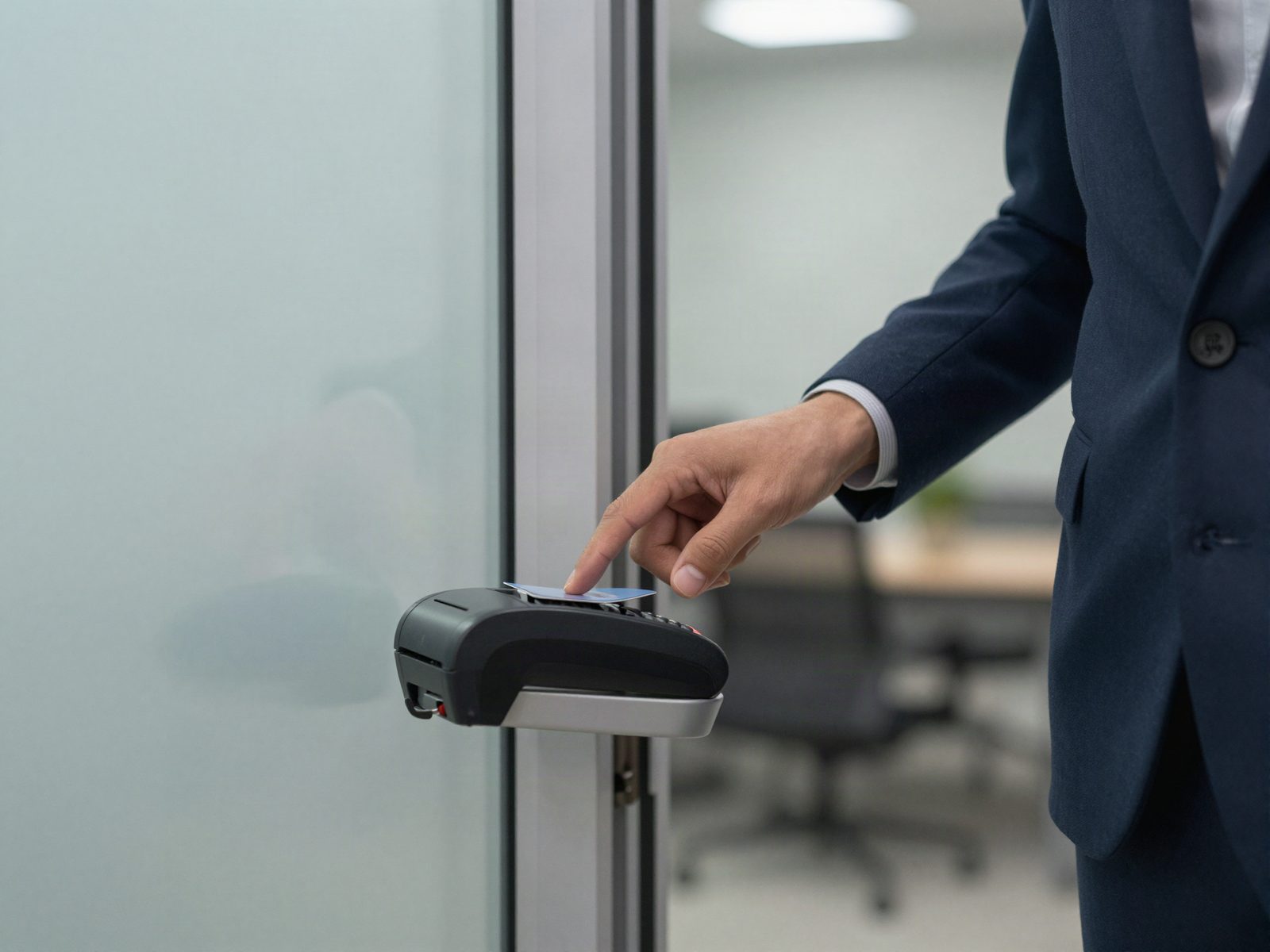
A basic proximity reader is the least expensive. Readers that support encrypted cards, Bluetooth mobile credentials or both cost more. Biometric readers cost the most and bring extra privacy questions.
Controllers and door count
The controller is a fixed cost shared by the doors it serves. A two-door system pays for a whole controller across two doors. A twelve-door system spreads that cost much thinner, which is why per-door pricing usually drops as projects get larger.
Which costs are one-time and which are monthly?
Budgeting gets easier when you separate the two.
One-time costs
- Readers, locks, door position switches and request-to-exit devices
- Controllers and power supplies
- Cabling and installation labor
- Programming, setup and training
- Initial cards or fobs
Ongoing costs
- Cloud software subscription, usually billed per door, per user or both depending on the platform
- Mobile credential fees on platforms that charge per credential or per user (some include them in the subscription)
- Replacement cards and fobs
- Service and maintenance
- Software support or license renewals for on-premises systems
On-premises systems shift more cost up front (a server and a software license) and less to monthly fees. Cloud systems need no local server and receive updates automatically, in exchange for a recurring fee. Over five years the totals can land closer together than people expect, so compare both over the same period.
How can you lower the cost per door?
- Reuse what works. Existing cabling, working electrified locks and sound door hardware can often stay. Have the installer test them instead of assuming everything gets replaced.
- Phase the project. Start with exterior entrances and the rooms that matter most (server room, records, inventory, pharmacy or cash). Add interior doors later on the same system.
- Don't put a reader on every door. Some interior doors are fine with keys. Our guide to access control vs. keys covers where each one makes sense.
- Use mobile credentials where they fit. Phones don't get lost as often as fobs, and a mobile credential can be revoked from the software instead of collecting a card.
- Compare cloud and on-premises over five years, including server hardware, updates and IT time, not just the first invoice.
- Plan the fire alarm tie-in early. If doors need to release on fire alarm, coordinating with your fire alarm system during design is cheaper than adding it after.
How is this different from total security system cost?
This article covers what one access-controlled door costs. If you are budgeting for cameras, intrusion alarms, monitoring and access control together, our guide to the real cost of business security systems covers the whole picture.
FAQ
Is a mag lock cheaper than an electric strike?
The lock itself usually is. After you add the motion sensor, exit button and fire alarm release that codes may require on an egress door, the difference often shrinks, and in some cases a strike ends up cheaper overall.
Do cloud access control systems charge per door or per user?
It depends on the platform. Some charge per door, some per user or credential, and some combine both. Ask for the monthly fee at your current door and user count and at the size you expect to grow to.
Can I add access control to doors that already have keyed locks?
Usually, yes. Many doors can be retrofitted with an electric strike or electrified lockset and a reader. Whether the existing hardware can stay depends on its condition and the door type.
How many doors should get readers?
Start with every exterior entrance people use and any room holding cash, records, drugs, inventory or network equipment. Many businesses leave low-risk interior doors on keys.
Get a per-door price for your building
Turner Security designs and installs commercial access control for businesses in Nashville, Middle Tennessee, Chattanooga and North Georgia, including cloud-based Brivo systems and Bluetooth mobile credentials. We'll walk your doors and give you a free quote. Request a proposal to get started.