Short answer: Put license plate recognition (LPR) cameras where every vehicle has to pass the same narrow spot and slow down: a gate arm, an entrance or exit lane, a guard shack or a parking garage ramp. Aim the camera down the lane so it sees the rear plate straight on, keep it low and close enough to read the characters, and give it its own job. A camera that watches a whole lot will record cars, but it usually won't read their plates.
License plate recognition turns each plate into searchable text, so you can see which vehicles came and went, get an alert when a flagged vehicle shows up and find the right footage by plate number. Where you put the camera decides whether any of that works.
Why does placement matter so much for LPR?
A regular security camera is set up to show as much area as it can. A plate camera is the opposite. It needs a close, tight view of a small rectangle on a moving vehicle, in daylight, at night and in the rain. If the plate is too small in the frame, at a steep angle or blurred by speed, the software can't read it, and you are left with video of a car and no plate number.
That's why businesses that try to read plates with the cameras they already have are often disappointed. The fix is usually not more cameras. It's one or two cameras in the right spots, set up only for plates.
What makes a good LPR spot?
The best spots have three things in common:
- Every vehicle passes through it. A single entrance lane, a gate or a drive-through point. If cars can go around the camera, some of them will.
- Vehicles slow down or stop. Gate arms, stop bars, speed bumps and tight turns all help. Slower vehicles mean sharper plates.
- The camera can see the plate straight on. The less the camera has to look sideways or steeply down at a plate, the better the read.
Where should a business put LPR cameras?
Gates and entrance lanes
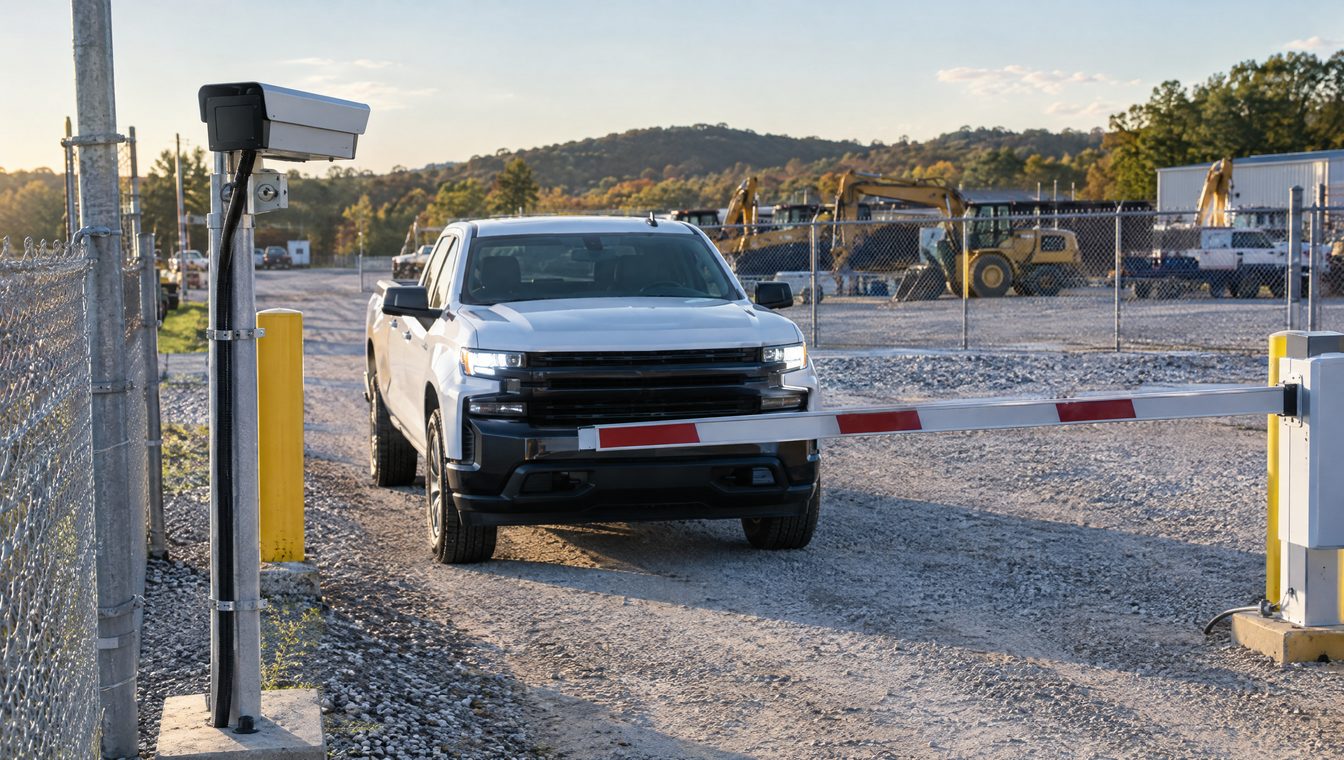
This is the most common spot and usually the best one. Tennessee and Georgia cars only carry a rear plate, so aim the camera at the back of the vehicle as it pulls up to or through the gate arm, while it is still moving slowly. Every state issues a rear plate, so one rear-facing camera reads Tennessee, Georgia and out-of-state vehicles alike. Add a second camera facing oncoming traffic only if you also want a clear view of the driver and the front of the vehicle.
Exits
Logging vehicles on the way out matters as much as logging them on the way in, especially at equipment yards, dealerships and distribution sites where you want to know when a vehicle left and what it may have taken. If entrance and exit are separate lanes, each one needs its own camera.
Truck docks and guard shacks
At shipping and receiving, plate reads give you a record of which trucks and trailers came through and when. Pair the plate log with a camera on the dock itself so you have both the vehicle and what happened at the door.
Parking garages and ramps
Ramps are natural choke points with slow traffic, which makes them good for plate reads. Watch the lighting: garage entrances go from bright daylight to shade, so the camera needs to handle both.
Where do LPR cameras usually fail?
- Wide shots of an open parking lot. Cars park at every angle and the plates are too small to read.
- Fast through-traffic on a frontage road or a lane with no reason to slow down.
- Cameras mounted too high looking steeply down, which flattens the plate.
- Headlight glare at night. Plate cameras use their own infrared lighting and settings to cut through headlights. A standard camera usually can't.
- Spots that trees, signs or parked trucks can block.
How does LPR work with the rest of your security?
License plate recognition is most useful when it's connected to everything else:
- Access control: pair plate reads with your gate so known vehicles are let in and unknown ones are reviewed.
- Live video monitoring: with remote guarding and live video monitoring, monitoring agents can see a plate alert and respond while the vehicle is still on site.
- Search after an incident: instead of scrubbing through hours of video, search by plate number and jump straight to the clip.
Who gets the most out of LPR?
Sites where vehicles are the risk or the business: car dealerships and equipment yards, chemical and industrial sites, construction sites, distribution centers, gated offices and any lot where you need to know which vehicles were there after hours.
Frequently asked questions
Can my existing security cameras read license plates?
Sometimes, at a short distance in good light. Most general-purpose cameras are set up to see a wide area, so plates come out too small or blurry to read, especially at night. We can review your current cameras first and recommend plate-reading cameras only where your existing ones can't read plates clearly.
How many LPR cameras do I need?
Usually one per lane you want to log. A site with one combined entrance and exit may only need one or two. A site with separate entry, exit and truck lanes needs one for each.
Is a business LPR system the same as Flock cameras?
Not necessarily. Flock is one brand of plate reader, best known for systems bought by police departments and cities, and many of those systems share reads with law enforcement. A business LPR system from Turner is installed on your property for your own security, and your business decides which plates to flag, who can see the data and whether it is shared with anyone.
Do LPR cameras work at night?
Plate cameras built for the job use infrared lighting and settings designed to read reflective plates in the dark and through headlight glare. That is one of the biggest differences between an LPR camera and a standard security camera.
Get a plate camera plan for your site
Turner Security installs license plate recognition cameras for businesses in Nashville, Middle Tennessee, Chattanooga and North Georgia, and connects them to your cameras, gates and live video monitoring. We'll walk your entrances and exits, show you where plates can be read clearly and recommend only the cameras you need.