Short answer: A physical break-in at a business is rarely over when the intruder leaves. The next few months usually include a police report, a search for usable video, an insurance claim, door and lock repairs, credential changes and hard questions from staff. How painful each step is depends almost entirely on what you set up before the incident: cameras that actually recorded, entry logs tied to people, and someone watching while it happened.
Below is a realistic timeline for a small or mid-size business, such as a contractor's shop in Smyrna or a distributor in Ooltewah, broken into the stages owners describe to us after the fact.
Night of the incident: the gap
Most break-ins happen when nobody is there. A side door gets pried, a fence gets cut, a truck backs up to a roll-up door. If the business has a standard alarm, a sensor may trip. If it has only recorded cameras, nothing happens in real time at all. The video sits on the recorder until somebody looks.
The length of this gap is the biggest single factor in what gets taken. Twenty minutes inside a building is enough to empty a tool crib.
Morning after: discovery and the first calls
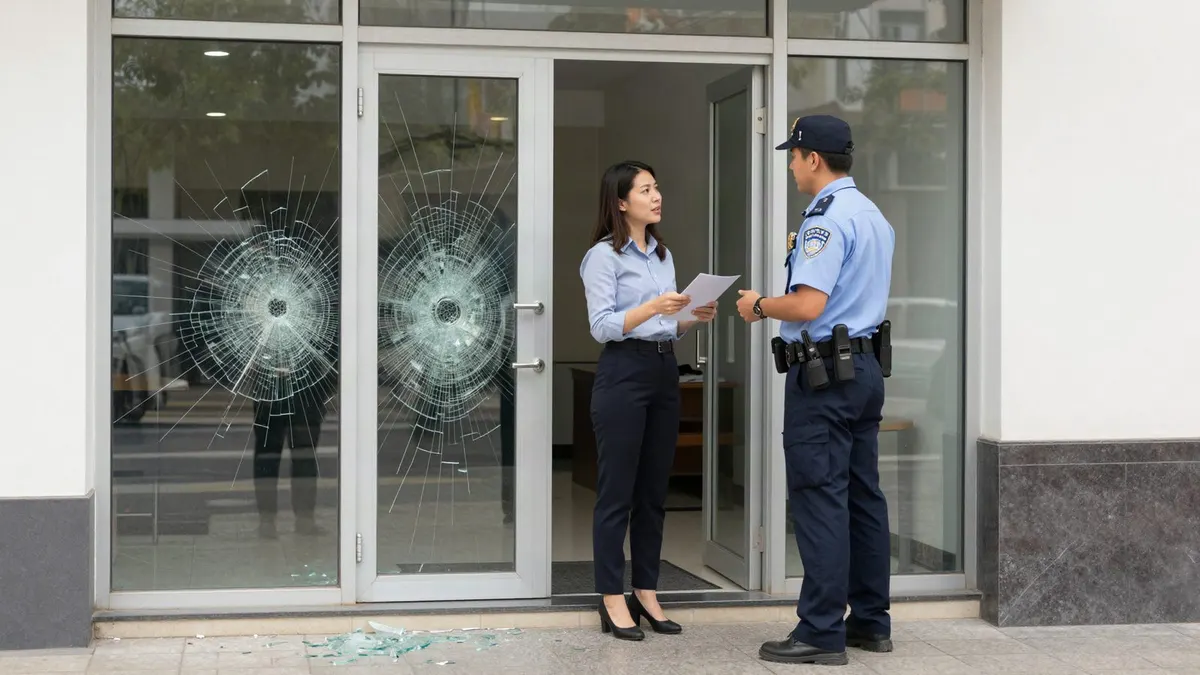
An employee arrives, sees the damage and calls a manager. The manager calls the police. Within the first hour, three questions come up:
- What time did they get in?
- How did they get in?
- What is missing?
This is when people discover whether the camera system was doing its job. Common findings: the camera at the broken door was pointed at the parking lot, the image is too dark to show a face, or the recorder stopped recording weeks ago.
Days 1 to 3: building the record
Police will ask for video and a list of stolen items with values. Your insurer will ask for the same, plus proof of how entry happened. Someone on your team will spend hours exporting clips, matching timestamps and making lists. If your access control system logs entries, you can show which doors opened and when, which helps rule employees in or out quickly. If you are working from keys and a shared alarm code, that question may never get a clean answer.
What to preserve right away
- Export video from every camera covering the period, not just the obvious one. Recorders overwrite old footage on a schedule.
- Save access control and alarm event logs for the same window.
- Photograph the damage before repairs begin.
Week 1: repairs and access changes
The broken door or gate has to be fixed, and often secured temporarily first. If keys were taken or the method of entry suggests someone knew the building, many owners rekey. With electronic credentials, you can turn off any card or code in minutes instead.
Weeks 2 to 8: the claim and the second look
Insurance claims take time and sometimes come back with questions about how the building was secured. This is also when owners take a hard look at their system and ask why nobody knew until morning. Employees may ask the same question, especially if they work late or open early.
Months later: the slow costs
Lost customer orders, replacement lead times on stolen equipment, higher deductibles and the time managers spent on all of it rarely show up on the police report, but they are real.
What shortens every stage
Turner Security works with Middle Tennessee and Chattanooga businesses on the setup that makes this timeline shorter:
- Close the gap on the first night. Live video monitoring with talk-down puts trained agents on your cameras during the hours you choose. They speak through an on-site speaker to people who should not be there and call police and your contacts if the person does not leave.
- Make the morning-after questions answerable. Cameras placed at the doors and gates where entry actually happens, with recording time sized to your needs, are covered on our commercial security camera installation page.
- Make the access question easy. Commercial access control ties every door to a person and a time, and lets you shut off a credential immediately.
FAQ
What should a business do in the first hour after a break-in?
Call the police, keep people out of the damaged area until it is documented, and have someone export video and event logs from every camera and door that covers the time window before any of it is overwritten.
Do I need to rekey after a break-in?
If keys were taken or entry looks like it used a key or code, rekeying or changing credentials is a reasonable step. With electronic access control you can disable specific credentials instead of changing every lock.
Can live monitoring stop a break-in in progress?
That is what it is built for. An agent who sees someone on the property can speak to them through a speaker and escalate to police while it is happening, instead of the business finding out the next morning.
Had a break-in? Start with a site review
If your business just went through this timeline, or you want to avoid it, Turner Security can walk the property and show you where the gaps were. There is no long-term contract required on security or monitoring. Call (615) 223-9600 for Smyrna and Middle Tennessee, or (423) 344-3787 for Chattanooga and North Georgia.