Short answer: After a storm, flood or fire, a damaged business is often open on several sides, without power or internet, and empty at night. A mobile camera trailer runs on its own solar and battery power and sends video over a cellular connection, so you can watch the property and record what happens while cleanup, repairs and insurance claims play out.
What the first days after damage look like
Middle Tennessee has seen this firsthand. When tornadoes hit early on March 3, 2020, NOAA reported at least EF-3 damage in Donelson and Mt. Juliet. The Nashville Fire Department responded to reports of more than 40 structural collapses, and Nashville Electric Service reported more than 44,000 residents without power that morning.
For a business owner, that kind of event creates a familiar set of problems:
- Walls, roll-up doors or windows are gone, so the building cannot be locked.
- Building power is out, so the existing cameras, recorder and alarm panel may be down too.
- Inventory, tools and equipment are still inside or stacked outside.
- Contractors, adjusters and crews are coming and going, and nobody is there overnight.
Why a mobile unit works when fixed cameras do not
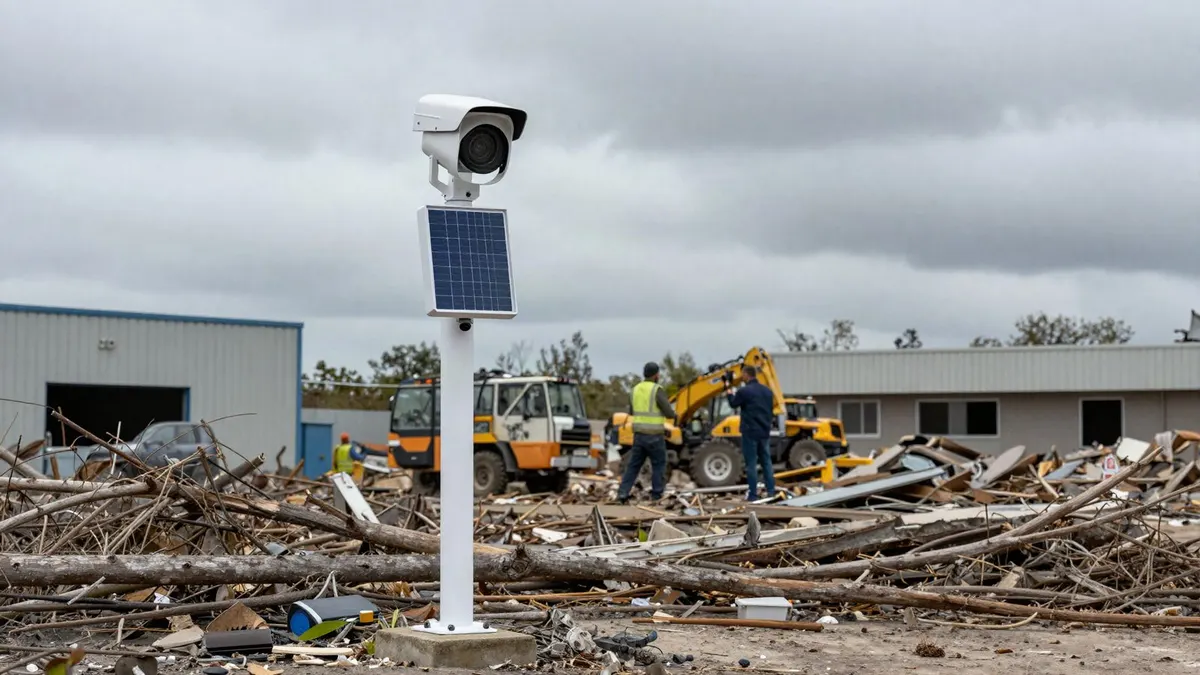
A mobile camera trailer is built for exactly the conditions a damaged site has. Solar panels and batteries power it, so it does not need building power. A cellular connection carries the video, so it does not need your internet. The cameras sit on a raised mast where they can see over debris and fencing, and the trailer can be moved as the site changes.
How businesses use it during recovery
- Securing an open building until walls, doors and windows are back.
- Watching a staging area where contractors leave equipment, lumber and roofing materials overnight.
- Keeping a time-stamped record of the site's condition and who was on it, which helps when questions come up with contractors or insurance.
- Covering temporary fencing and gates that are easy to push through.
- Bridging the gap while permanent cameras and the alarm system are repaired or replaced.
Add live monitoring for the nights that matter most
Recording alone tells you what was taken. Pairing the trailer with live video monitoring means monitoring agents can watch the site, speak to anyone who walks onto it through the trailer's speaker and call police or your contact list when someone does not leave. After a disaster, when police are stretched thin, a live voice telling a trespasser they are on camera can stop a problem before anything is taken.
Plan before the next storm
- Know who you will call. Have your security company's number in the same place as your insurance agent and restoration contractor.
- Pick a spot for a trailer now. Look for level ground with a clear view of doors, the lot and storage, and open sky for the solar panels.
- Keep your emergency call list current. Who should a monitoring agent call at 2 a.m. if someone is on the property?
- Ask your insurance agent what they expect you to do to protect a damaged property, and how they want it documented.
- Keep a copy of your camera system details: what you have, where it is mounted and who supports it, so restoring it later goes faster.
Mistakes to avoid
- Waiting until the first theft to put cameras on a damaged site. The first nights are often the riskiest.
- Placing the trailer where debris piles block the view, then never moving it as cleanup changes the site.
- Assuming the old cameras are still recording. Without power and a working recorder, they are not.
Frequently asked questions
Does a mobile camera trailer need power or internet?
No. It runs on solar panels with battery backup and uses a cellular connection for live viewing and recording.
Can I watch the site from my phone?
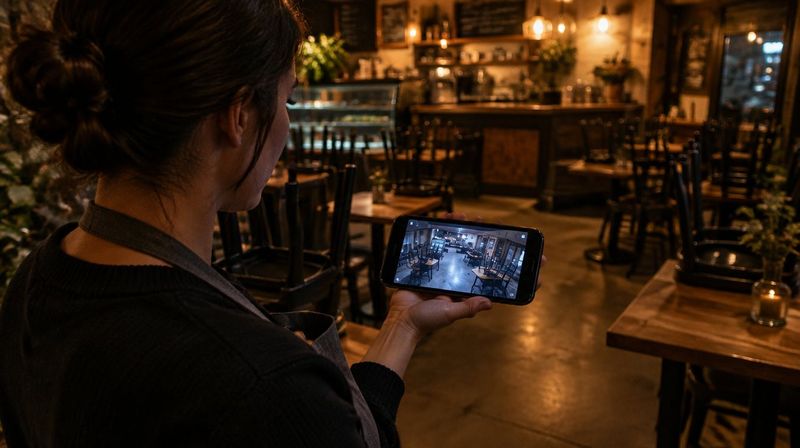
Yes. Video goes over the cellular connection, so you can view live and pull up recordings remotely.
How quickly can a trailer be placed?
It depends on availability and the site, so call as soon as you know you need one. We will tell you honestly what we can do and when.
Get eyes on a damaged or temporary site
See our mobile camera systems and request a quote. Call our Smyrna office at (615) 223-9600 for Nashville and Middle Tennessee, or our Chattanooga office at (423) 344-3787.