Two security proposals can list the same number of cameras and still describe very different projects. One includes replacement cabling, operator training, storage configuration, and testing. The other assumes the existing network is ready and leaves those items outside the quoted price.
That does not automatically make either proposal wrong. It means the totals are not yet comparable.
For a Tennessee business planning a new system or an upgrade, a useful commercial security proposal comparison starts with scope. Before choosing a vendor, make the promises, assumptions, and responsibilities visible enough that your team can explain what it is buying.
Put the business problem at the top of both proposals
Write a short statement of what the project must accomplish. For example: staff need to review activity at the receiving door, distinguish who entered the office after closing, and retrieve relevant recordings without relying on one manager's personal phone.
That is an illustrative requirement, not a prescription for every building. Your priorities may involve customer entrances, restricted work areas, or several locations with different operating hours.
Give each bidder the same statement. Ask where each requirement is addressed in the proposed equipment, configuration, and handoff. If a requirement is absent, request clarification before treating the offer as complete.
The starting point for an integrated project is the relationship between the components. Turner's commercial security systems service provides a place to discuss cameras, access, intrusion detection, and connected infrastructure together.
Compare these six parts of the scope
Coverage, not just quantities
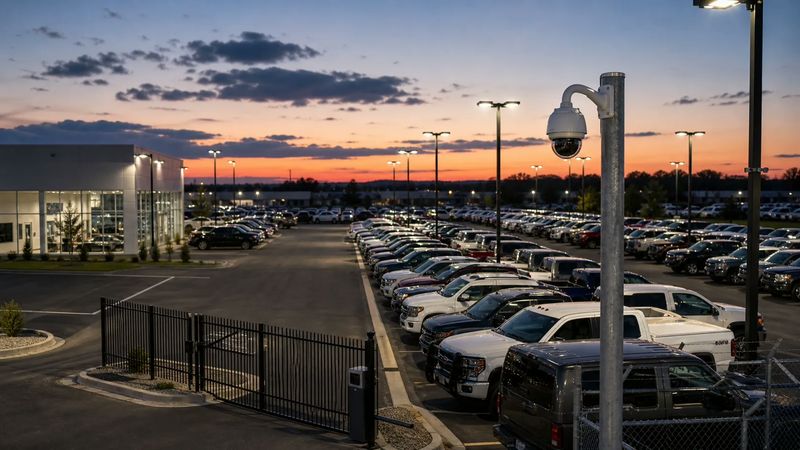
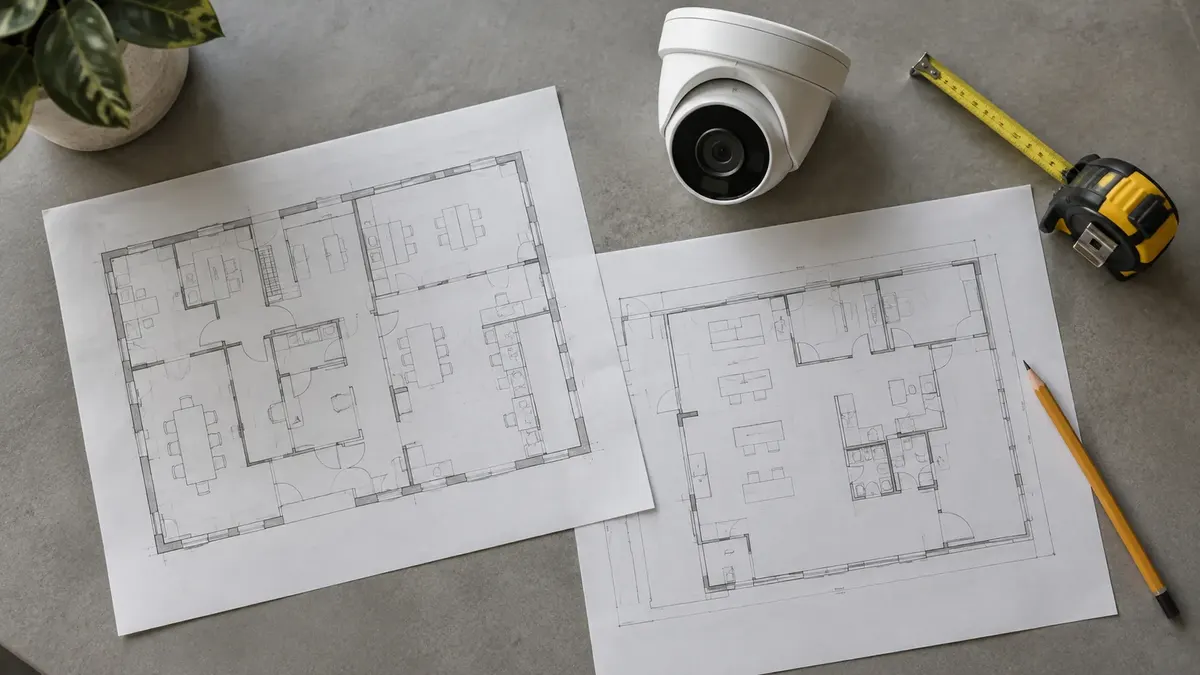
A camera count does not describe the job each camera is expected to do. Ask for a location plan and a short purpose for every view. Distinguish general activity awareness from the more demanding task of capturing useful identifying detail.
Ask whether the proposed view has been assessed during the conditions that matter to your operation. An entrance with strong afternoon backlighting deserves a different discussion from an evenly lit interior corridor. Put those conditions in the acceptance criteria rather than assuming the product specification settles the question.
Installation work and exclusions
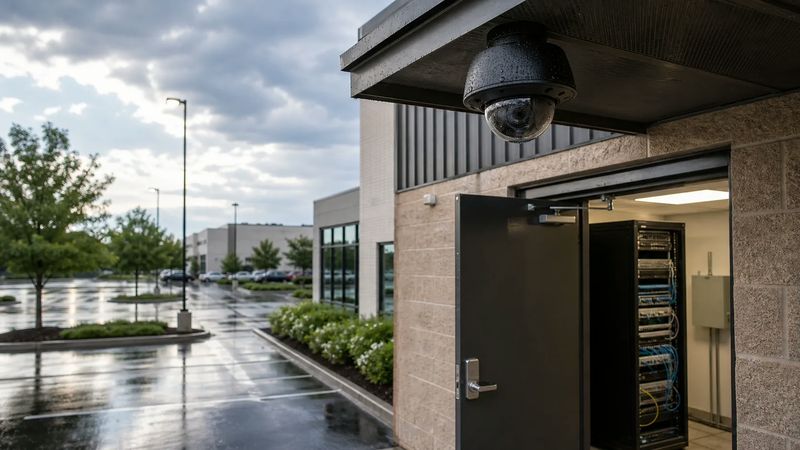
Request an explicit list of included installation work: cable routes, mounting, equipment setup, access equipment, patching, and cleanup. Then read the exclusions with equal care.
Who provides electrical work? Is new network hardware included? What happens if an existing cable fails testing? Who coordinates landlord permission? Do not turn an unanswered question into an assumed inclusion. Ask the bidder to price an allowance or explain the change-order process.
Recording and retrieval
Identify which devices record, where the recordings reside, and how staff retrieve them. Ask what recording settings and usable capacity support the proposed retention target. Request an explanation of the effect of adding cameras later.
Make retrieval part of the demonstration. Your operator should be able to locate an agreed test event and open an exported clip on an authorized second device. A live picture is useful, but it is not the same deliverable as a workable recording and export process.
Compatibility and licensing
If the design reuses equipment, ask for the compatibility basis rather than accepting a general assurance. ONVIF's conformant product database identifies registered products and the firmware or software versions associated with conformance. A brand's participation alone is not proof that a particular product is listed.
Even when an interface is supported, the proposal should identify the features actually being delivered. Separate basic video from analytics, events, audio, and other optional functions. Ask which licenses are perpetual, recurring, transferable, or tied to specific hardware under the vendor's terms.
Service after installation
Look for support hours, reporting channels, warranty boundaries, and the process for a failed device. Clarify whether a response commitment means acknowledging a request, starting remote diagnosis, arriving on site, or completing a repair.
Those are different milestones. Do not infer a repair deadline from a response-time phrase. Ask how parts availability, third-party services, and work outside the contracted scope are handled.
Training and account handoff
Name the people who will receive training and the tasks they must perform afterward. This may include reviewing video, managing credentials, or identifying a recording problem.
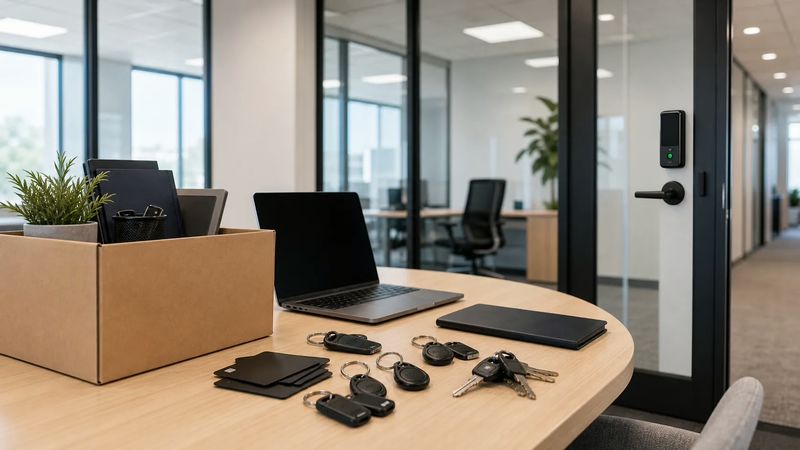
Require a clear account handoff process. Know who controls business access, who holds recovery information, and what authority a service provider retains. Avoid putting passwords in an emailed proposal; agree on a secure transfer method instead.
A simple way to expose mismatched bids
Create a comparison sheet with one row per requirement and four possible answers: included, optional, excluded, or unresolved. Record the page or written response supporting each answer.
For example, an after-hours installation might be included in one bid and available for an additional charge in another. A storage upgrade might depend on a field inspection. A support package might renew separately from equipment coverage. These are commercial differences to evaluate, not reasons to automatically reject a proposal.
Do not award a point simply because a vendor uses a favorable adjective. Replace words such as robust, seamless, and future-ready with a deliverable your team can inspect or demonstrate. If the bidder cannot explain how success will be checked, leave that row unresolved.
Make acceptance a shared agreement
Before work begins, agree on the handoff evidence: camera views, sample recordings, tested user permissions, training completion, and any unresolved items. Identify who signs off and what happens when a test does not meet the written requirement.
For projects involving electronic doors, building alterations, or life-safety interfaces, also clarify who is responsible for applicable design review and approvals. A proposal should not substitute a sales assurance for the relevant professional or authority's determination.
Keep the comparison focused on your operation. Our discussion of business security system costs provides broader purchasing context; the proposal review is where you turn that context into a specific scope.
Ask for a second look before you commit
If two quotes appear difficult to reconcile, gather the scope pages, equipment lists, exclusions, and your main operational concerns. Remove sensitive credentials before sharing anything.
You can request a proposal discussion with Turner Security Powered by TechCore to clarify the project requirements. Call Nashville at (615) 223-9600 or Chattanooga at (423) 344-3787. The useful next step is a clearer comparison, not an automatic recommendation to buy the most expensive package.